Categories
Addiction Children & Young People Difference between Counselling & Psychotherapy Gender & Sexuality Grieving & Loss Marriage & Long-Term Relationships Mindfulness and Mental Health PTSD & Trauma Relationships

The Power of Feeling Truly Heard: Why Listening Matters

Feeling truly heard is one of the most powerful human experiences. It reassures us that our thoughts, emotions, and stories matter. Yet, in a world full of distractions and instant responses, genuine listening has become rare. Relearning the art of listening isn’t just good communication – it strengthens relationships, improves wellbeing, and builds deeper trust.

Why Listening Matters More Than Ever
Modern life moves fast. We multitask, skim conversations, and often plan our response long before the other person has finished speaking. But real listening goes beyond simply hearing words. It means being present, curious, and open.

When someone feels truly heard, something meaningful happens:

  • They feel valued and understood
  • Their stress levels decrease
  • They gain clarity about their own thoughts
  • Communication flows more easily
  • Conflicts become easier to resolve

Active listening builds connection. It transforms conversations from transactions into moments of genuine human connection.

Listening Helps Build Stronger Relationships
Whether at work, with friends, or at home, listening is the foundation of trust. When people sense that they’re being dismissed or misunderstood, emotional distance forms quickly. But when we listen – really listen – we create a safe space for honesty and collaboration. This is particularly powerful in leadership, where employees who feel heard report higher engagement and loyalty.

It Boosts Your Emotional Intelligence
Great listeners are often great leaders. By paying attention not only to words but also to tone, body language, and emotions, you develop deeper empathy and insight. This helps you respond thoughtfully rather than react impulsively.

Listening Encourages Better Decision-Making
When you listen fully, you gain more information, notice patterns, and understand context. This leads to better problem-solving and fewer misunderstandings. In contrast, assumptions created from half-heard conversations often cause unnecessary complications.

How to Become a Better Listener
The good news? True listening is a skill anyone can develop. A few practical habits make a huge difference:

  • Maintain eye contact and stay present
  • Avoid interrupting or finishing sentences
  • Ask open questions that invite deeper conversation
  • Reflect back what you’ve heard to ensure understanding
  • Resist the urge to jump straight to advice-giving
  • Put away distractions – especially phones

These simple actions show respect and signal that you value the other person’s perspective.

Final Thoughts 💬
In a busy world, it’s easy to feel overlooked or unheard. Yet often, what people need most isn’t advice or quick solution – it’s the simple experience of speaking openly while someone truly listens.

When we talk to someone who listens without judgement or interruption, our thoughts can begin to untangle. Emotions that once felt overwhelming start to make more sense, and the act of putting feelings into words can create an immediate sense of clarity and relief. For many, this becomes the first meaningful step toward change.

This is the essence of counselling. It offers a calm, confidential space where you can explore what’s happening in your life, understand your feelings, and consider what might help you move forward. There’s no pressure, no expectations – just supportive, thoughtful conversation.

If you’re considering talking to someone, we offer a free 15‑minute phone consultation to help you explore your options and decide what feels right for you.


Categories
Addiction Children & Young People Gender & Sexuality Grieving & Loss Marriage & Long-Term Relationships Mindfulness and Mental Health PTSD & Trauma Relationships

🌿 How to Reset After an Argument

We have all been there. One minute you are having a normal conversation, and the next you are in the middle of an argument that feels bigger than it should be. Voices rise, feelings flare, and suddenly the original issue is buried under frustration.

But the good news?
You can reset an argument – without ignoring the problem, without “giving in,” and without letting resentment build. Here’s how to hit that emotional reset button so the conversation becomes productive again.

💛  Pause – do not push through the tension

When things heat up, our brains switch to “defend, attack, or retreat.”
That is not the mindset for solving anything.

A short pause like, “I want to finish this conversation, but I need a moment to calm down so I can actually hear you,”
can completely shift the energy.

It’s not avoidance. It’s strategy.

🗣 Name what is happening

A simple acknowledgment breaks the cycle:

  • “We’re going in circles.”
  • “This feels tense – can we start again?”
  • “I think we both want to fix this but we’re getting stuck.”

Calling it out invites’ teamwork instead of tug‑of‑war.

❤️ Return to the goal, not the drama

Most arguments go off‑track because we forget what we actually want.

Try saying:

  • “Let’s reset. What’s the real issue?”
  • “What do we both want here?”
  • “How can we solve this together?”

Suddenly, it is two people vs. the problem, not each other.

👂 Give each other space to speak (without preparing a rebuttal)

When you listen to respond, you are still arguing.
When you listen to understand, you are connecting.

Try slowing the conversation down:

  • One person shares their thoughts.
  • The other repeats back the key point to show they have understood.
  • Then switch roles.

It sounds simple, but it can be a breakthrough – completely shifting the tone of the conversation.

💬 Use reset language

These phrases cool down an argument instantly:

  • “Let’s start over.”
  • “Can we rewind a bit?”
  • “I didn’t say that well – let me try again.”
  • “I hear you. Here’s what I’m feeling.”

They invite a do‑over instead of a showdown.

🤝 Choose repair over being right

In the middle of a heated moment, ask yourself:

Do I want to win… or do I want us to be okay?

Resetting an argument is not about surrendering – it is about prioritising connection and understanding, so the real solution can emerge.

💭 Final thought

Arguments do not ruin relationships. The inability to repair them does.

A reset is not weakness – it is wisdom. It shows you care more about the relationship than the rush of being right.

Here is to more calm conversations, deeper understanding, and better “resets” for all of us. ✨

Categories
Addiction Children & Young People Difference between Counselling & Psychotherapy Gender & Sexuality Grieving & Loss Marriage & Long-Term Relationships Mindfulness and Mental Health PTSD & Trauma Relationships

Change Often Starts Quietly 🌱

We like to think change arrives with fireworks – with big announcements, dramatic breakthroughs, or life‑altering events. But the truth? Most change begins in silence.

It starts in the small moments no one else sees; in the quiet corners of your mind where doubt lives – but courage grows.

  • Feeling the first hint of hope after a difficult period.
  • The morning you decide to try again.
  • The quiet “I can do better” whispered to yourself.
  • The tiny shift in perspective after a tough day.
  • The choice to take one small step, even when the road looks long.

These subtle moments are powerful. They are signs that something within you is adjusting, healing, or becoming ready for the next step.

Over time, those small internal shifts grow into healthier patterns, clearer boundaries, and a stronger sense of self. What once felt impossible gradually becomes manageable. What felt overwhelming begins to soften.

You do not have to navigate it alone. Counselling provides a supportive space to notice these early shifts, understand what they mean, and build on them with confidence. Over time, these small, consistent steps can lead to real progress and long‑lasting wellbeing.

Categories
Addiction Children & Young People Difference between Counselling & Psychotherapy Gender & Sexuality Grieving & Loss Marriage & Long-Term Relationships Mindfulness and Mental Health PTSD & Trauma Relationships

The Power of Talking Things Through 💬

When worries, emotions, or difficult thoughts stay locked in our minds, they can feel heavier and harder to understand. Speaking them out loud – especially to someone who listens with empathy and without judgement – can bring clarity, relief, and a fresh perspective.

Talking things through helps you:

  • Untangle confusing thoughts
  • Understand your emotions more clearly
  • Feel less alone with your struggles
  • Take the first steps toward positive change
  • Gain confidence in moving forward

You don’t need to have everything figured out before reaching out. Simply beginning a conversation can be a powerful step toward feeling better.

If you’re curious about whether counselling might be right for you, we offer a free 15‑minute phone consultation. It’s an opportunity to connect, ask questions, and explore what supportive therapy could look like for your needs.

Categories
Addiction Children & Young People Difference between Counselling & Psychotherapy Gender & Sexuality Grieving & Loss Marriage & Long-Term Relationships Mindfulness and Mental Health PTSD & Trauma Relationships

Compassionate, Personalised Support for Life’s Challenges 🌿

For more than 30 years, we’ve been walking alongside individuals, couples and organisations across Devon and Cornwall, offering support through many of life’s toughest moments.

We know that every person’s story is unique. That’s why our counselling is never one‑size‑fits‑all. We take the time to understand your experiences, your goals and what truly matters to you – shaping each session around your needs.

Our experienced team supports people with:

  • Relationship challenges
  • Anxiety and stress
  • Addiction
  • Bereavement and loss
  • Depression
  • Workplace pressures
  • Identity and life transitions
  • Menopause
  • Sexual health
  • Eating difficulties
  • Support for young people

If you’re thinking about counselling but aren’t quite sure yet, we offer a free 15‑minute phone conversation. It’s a relaxed, no‑pressure chance to ask any questions, explore your options and get a feel for what might be right for you.

Categories
Addiction Children & Young People Difference between Counselling & Psychotherapy Featured Article Gender & Sexuality Grieving & Loss Marriage & Long-Term Relationships Mindfulness and Mental Health PTSD & Trauma Relationships

Why we started blogging

Over the years, we have had the privilege of sitting with people through some of their most vulnerable moments – heartbreak, confusion, grief, and growth. Each story is unique, but many share common threads: the need to feel heard, the desire for connection, and the courage to seek change.

Blogs are our way of extending that space beyond the counselling room. Whether you are navigating a relationship breakdown, supporting a young person through a tough time, or simply curious about how therapy works, we hope these posts offer insight, comfort, and maybe even a sense of companionship.

What you will find here; We write about the real-life issues that bring people to counselling:

  • Communication and Reconnection: How small shifts in how we listen and respond can rebuild trust and closeness.
  • Grief and Loss: Understanding the many forms grief can take, and how to move through it at your own pace.
  • Young People’s Challenges: From anxiety and identity to peer pressure and family dynamics – we explore what it is like growing up today.
  • Relationship Dynamics: Whether romantic, familial, or platonic, relationships shape us. We look at how they evolve, and how to nurture them.

Why it matters; We believe that healing begins with understanding – and sometimes, reading something that reflects your own experience can be the first step. Our hope is that our blogs feel like a gentle companion, offering clarity when things feel cloudy, and reminding you that you are not alone.

We are based in Looe Street, Plymouth, and always happy to chat in person when the time feels right for you. Until then, we invite you to explore, reflect, and reach out if something resonates.

Categories
Addiction Difference between Counselling & Psychotherapy Grieving & Loss Mindfulness and Mental Health PTSD & Trauma Relationships

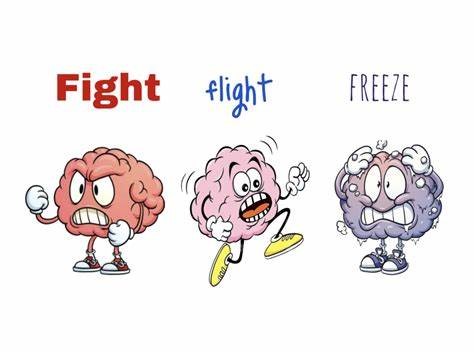
Fight-or-flight; our body’s automatic reaction to stress or danger

The Fight-or-Flight Response: How Our Brain Reacts to Threats

The brain is a complex organ that regulates many aspects of our physical and psychological well-being. It constantly processes information from our senses and the environment, and responds accordingly. However, when the brain perceives something as a potential threat, it activates a system that prepares us to stay and deal with the danger or run away to safety.

The Ancient Survival Mechanism

The term fight-or-flight comes from our ancient ancestors when they were faced with danger and had to choose; either fight or flee.

The fight-or-flight response, also known as the acute stress response, refers to the physiological reaction that occurs when we encounter something mentally or physically terrifying. Imagine facing a wild animal or an imminent danger – your body gears up for action.

Three Stages of Fight-or-Flight:

  1. Alarm Stage: During this stage, the central nervous system ramps up, preparing your body to fight or flee. The sympathetic nervous system activates, leading to increased heart rate, your blood pressure rises and breathing rate increases and becomes shallow. Hormones like adrenaline, noradrenaline and cortisol flood your system.
  2. Resistance Stage: Your body attempts to normalise and recover from the initial elevated fight-or-flight response – this happens in 3/1000 of a second in perceiving the threat, and we decide whether to confront the danger, freeze or flee. These changes to our body help us act appropriately and rapidly, usually, our body will return to its natural state after 20 to 60 minutes after the perceived threat has gone.
  3. Exhaustion Stage: If these stages occur repeatedly over time and there is a prolonged sense of danger you will experience ongoing stress and anxiety and risk developing physical and mental health problems.

You are probably already aware of the phrase Fight-or-Flight but there are 3 other survival reactions when we feel threatened, Freeze, Flop and Friend which make up our defensive fear responses – also known as the five F’s.

When faced with danger each of the five F’s has its own hope for a possible outcome, that is to stay alive and depending on the nature of the situation, each of these defences reduce our being a threat to our attacker.

Our active defences are to;

  • Friend – to befriend our attacker in the hope of appeasing the situation
  • Fight – physically and verbally responding to the threat – showing aggression
  • Flight – to run away from the situation

Our passive defences are to;

  • Freeze – in order to avoid detection or you ‘just froze’ and unable to shout or call for help
  • Flop – to flop or feint; to minimise harm when you have no other option (as above) in the hope you will be left alone

In the modern world, that same mechanism can sometimes be triggered by everyday stressors or imagined threats. But understanding its origins can empower us to manage it more effectively. So, next time fear creeps in, take a deep breath, acknowledge it, and remember that your brain is doing its ancient job!

Categories
Addiction Children & Young People Difference between Counselling & Psychotherapy Featured Article Gender & Sexuality Grieving & Loss Marriage & Long-Term Relationships Mindfulness and Mental Health PTSD & Trauma Relationships

Is your counsellor a good fit for you?

There are so many counsellors offering a vast range of different therapies and approaches that it’s hard to know how to make the right choice, but it is so important that we do.

Finding the right counsellor, one who you can connect and feel safe with is important. Therapy can be a powerful tool for healing and growth, but only if you have a competent and trustworthy professional by your side. It can be difficult when we are feeling vulnerable and in need of help, to be confident enough to choose someone.

At Personal and Relationship Counselling (PRC) in Plymouth we offer a free 15-minute telephone consultation prior to booking a first appointment. Recommendations are good, but if you don’t have one, a telephone conversation can help and don’t be afraid to say ‘no thank you’, a good counsellor will be understanding – read about our counsellors on ‘Our Therapists’ page.

You can be assured that each counsellor has been handpicked, chosen for their competency and professionalism, empathy and compassion. We’ve checked their qualifications and experience, making sure that all are on the BACP Register of Counsellors and Psychotherapists or an equivalent professional body.

We offer a range of approaches and techniques to suit individual needs and find the fit that’s right for you. If we can’t meet your requirements, we will make recommendations of other trusted local Plymouth counsellors.

Here are some skills, traits and professional behaviours to look out for in your counsellor.

Good Counselling Skills:

  • Actively listening:  A good therapist will pay close attention to what you’re saying and ask clarifying questions. If you feel misunderstood or unheard – that’s a problem.
  • Focused attention: Does your therapist seem bored, tired, preoccupied or disengaged. If so, you’re not getting the focused attention you deserve.
  • Addressing Your Specific Concerns: Therapists should and be able to hear your issues and understand the impact they have on you, and tailor appropriate responses to meet your needs. If they seem stuck in one method or aren’t able to manage with your issue – you may need to find a better fit.
  • Non-judgemental:  Therapy needs to be a safe space to explore difficult emotions. If you feel judged or ashamed this isn’t going to help you – indicating it isn’t a good fit.
  • Working together: Therapy should be a collaborative process with your counsellor helping you to explore deeper and stay with the difficult feelings – rather than handing out simplistic, generic advice and platitudes.
  • Making progress: While you might experience some emotional discomfort processing difficult topics, you should generally feel some sense of healing and hope moving forward.

Maintaining Professional & Ethical standards:

  • Keeping to Appointment Times/Scheduling:  Having a regular time for your counselling is helpfulFrequent cancelling or rescheduling of appointments by your therapist shows a lack of respect for your time and can disrupt your progress in therapy.
  • Relevant Advice: Remember that therapists should stay within their area of expertise. If yours is giving medical, legal or financial advice – that’s not OK.
  • Confidentiality: Counsellors are required to keep your information private, with some exceptions. If you feel your therapist might be gossiping about you or sharing details inappropriately, that’s a concern.
  • Respecting Your Boundaries: If your counsellor shares too much personal information about themselves, pressures you to socialise outside of sessions, asks you for gifts or personal favours or makes unwanted physical contact – that’s a red flag.

Trust your instincts: Sometimes the chemistry just isn’t right. If you feel uncomfortable or unsafe with your therapist, it’s important to find someone else, someone you can connect with.  If you do notice any of the red flags and warning signs it’s time to look for a new therapist.

If you have any concerns, please feel free to contact us Plymouth Counselling (PRC).

Categories
Grieving & Loss Mindfulness and Mental Health PTSD & Trauma Relationships

Why is Grieving so Hard? Let’s Talk About it

Ever feel like society pushes us to be happy all the time? Like there’s no room for the heavier emotions? That’s part of why grieving feels so tough -it’s not exactly an emotion people celebrate, is it? But grief is just as human as joy. It’s messy, raw, and yes, downright uncomfortable!

When we lose someone close, or even experience a big life change, emotions can hit us like a whirlwind. Sadness, guilt, numbness, blame – it’s a lot and it doesn’t always make sense. You might even feel like you’re going mad or losing your grip. Spoiler alert: You’re not! Grief doesn’t follow a neat, logical path; it’s chaotic, like a storm inside your mind.

See our diagram below to gain insight into the chaotic cycle of grief;

And grief isn’t just about losing someone. Ever felt strangely low after moving into a new home, starting a new job, or welcoming a child? That’s grief too – the loss of the old to make way for the new. It’s okay to feel torn, life’s gains often come with some losses.

The truth is, you don’t have to have it all together, pretending everything is fine so others feel comfortable – that’s not doing you any favours. When feelings are bottled up, they often resurface later, sometimes manifesting as anxiety or depression, which can stem from unresolved grief.

Talking helps. Whether it’s with friends or bereavement counselling, giving yourself permission to feel and share your emotions can make a world of difference. Grieving isn’t about ‘getting over it’; it’s about making peace with it in your own time.

So, let’s ditch the guilt about feeling sad. Let’s stop thinking we “should” be happy just because the world expects it. Your emotions are valid – all of them!

If you would like to know more about how our counsellors in Plymouth can help with your loss, please give us a call or email and we’d be happy to answer any questions you might have.

Categories
Addiction Difference between Counselling & Psychotherapy Gender & Sexuality Grieving & Loss Marriage & Long-Term Relationships Mindfulness and Mental Health PTSD & Trauma Relationships

How Do I Choose the Right Therapist for Me?

Talking to a therapist is a very personal and often vulnerable experience, so it is important to find a therapist who you connect with and most importantly, feel comfortable sharing your innermost thoughts and feelings.

If you are experiencing relationship issues, depression, anxiety, bereavement, addiction, or problems with gender, sexuality or identity, you might be considering reaching out for counselling and psychotherapy in Plymouth. However, we know that this can be a daunting process especially if you are doing it for the first time. At Personal and Relationship Counselling, we have an excellent, handpicked team of therapists who specialise in a range of different issues and approaches to therapy.

Here’s how the process works;

Initial Consultation
Visit our Our Therapists’ page and scroll through the list of therapists to see if there is anyone you might like to work with. After choosing your preferred therapist, please book in via our online diary, or get in touch with us to set up a free initial 15-minute phone consultation. This gives you a chance to learn more about how they work, and briefly discuss the issues you are facing to see how they may help you work through them.
This also enables both of you to get a good feel as to whether you will be a good fit and decide if you would like to book your first session.

Arrange Your First Session
If you are happy to proceed with the therapist you spoke with, they will set a weekly slot for sessions at a time that is convenient for you.
However, if you do not want to see that therapist, choose another, or you can let us know what you want, and we will assist you with finding the right counsellor or psychotherapist.
It is important to not just match your specific problem with the right specialist, but also someone who makes you feel at ease.

Ongoing Sessions and Support
Once you’ve agreed a time and date, your sessions will begin. You will come to our practice in Looe Street, close to the Barbican and City Centre in Plymouth, and meet with the therapist you have chosen.
They work autonomously with you, building a close therapeutic relationship based on trust and confidentiality, giving you the space to explore your emotions in your own way, in a safe, non-judgemental, warm & compassionate space.
You will then meet, usually on a weekly basis until you have resolved the issue that caused you to seek our support.

Are you thinking about seeking counselling and psychotherapy in Plymouth or online? If so, feel free to get in touch with us to ask any questions.