Categories
Addiction Children & Young People Difference between Counselling & Psychotherapy Featured Article Gender & Sexuality Grieving & Loss Marriage & Long-Term Relationships Mindfulness and Mental Health PTSD & Trauma Relationships

Why we started blogging

Over the years, we have had the privilege of sitting with people through some of their most vulnerable moments – heartbreak, confusion, grief, and growth. Each story is unique, but many share common threads: the need to feel heard, the desire for connection, and the courage to seek change.

Blogs are our way of extending that space beyond the counselling room. Whether you are navigating a relationship breakdown, supporting a young person through a tough time, or simply curious about how therapy works, we hope these posts offer insight, comfort, and maybe even a sense of companionship.

What you will find here; We write about the real-life issues that bring people to counselling:

  • Communication and Reconnection: How small shifts in how we listen and respond can rebuild trust and closeness.
  • Grief and Loss: Understanding the many forms grief can take, and how to move through it at your own pace.
  • Young People’s Challenges: From anxiety and identity to peer pressure and family dynamics – we explore what it is like growing up today.
  • Relationship Dynamics: Whether romantic, familial, or platonic, relationships shape us. We look at how they evolve, and how to nurture them.

Why it matters; We believe that healing begins with understanding – and sometimes, reading something that reflects your own experience can be the first step. Our hope is that our blogs feel like a gentle companion, offering clarity when things feel cloudy, and reminding you that you are not alone.

We are based in Looe Street, Plymouth, and always happy to chat in person when the time feels right for you. Until then, we invite you to explore, reflect, and reach out if something resonates.

Categories
Difference between Counselling & Psychotherapy Featured Article Mindfulness and Mental Health

Guided by the BACP Ethical Framework

When you choose to speak with a counsellor, you’re placing a deep trust in them – sharing thoughts, feelings, and experiences that may never have been spoken aloud before. We don’t take that lightly.

That’s why everything we do is guided by the BACP Ethical Framework – a set of professional standards that helps ensure counselling is safe, respectful, and grounded in integrity. It’s not just a set of rules; it’s a commitment to how we show up for you.

This framework shapes how we:

  • Protect your privacy and confidentiality, so you feel safe to speak freely.
  • Make ethical decisions, especially when things feel complex or emotionally charged.
  • Continue our professional development, because learning never stops – and you deserve the best support we can offer.

We believe that counselling should be a space where you feel truly seen and heard, without judgment. The Ethical Framework helps us create that space, session by session.

If you’re curious about how this framework works in practice – or how it supports your wellbeing – we’re always happy to talk more.

📍We’re based at Personal & Relationship Counselling Plymouth, in Looe Street. When you’re ready, we’re here.

Categories
Difference between Counselling & Psychotherapy Mindfulness and Mental Health Relationships

Attachment theory can help us in our relationship

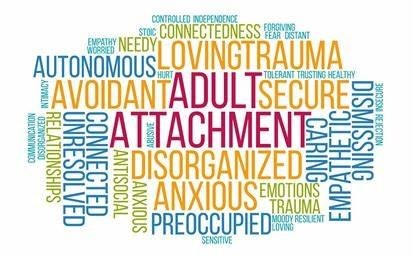
Attachment theory helps us to understand our partner’s behaviour better and explains how early life interactions can shape our current relationships. The emotional bonds we form as children can have significant impact upon how we relate to each other, especially in our romantic relationships.

Attachment theory suggests we develop attachment styles – the emotional bonds formed between a child and its parents/caregivers – which will be replayed later in life, in our intimate relationships.

There are predominantly three primary attachment styles: secure, anxious and avoidant.

Secure attachment: If we are lucky enough to have formed secure attachments in childhood, then we are likely to be confident in building trusting relationships, feel lovable and are more able to offer and receive love and compassion.

Anxious attachments: a sense of unpredictability during our childhood can leave us craving closeness and reassurance, often leading to difficulties in relationships. The fear of being left alone, or being criticised, can mean we become preoccupied with our partners whereabouts and feel the need to please them, so they don’t leave us.

Avoidant attachment: neglectful or preoccupied parents can often leave us with a sense of not being important to others. We can respond by dismissing our needs and putting others first, denying our relational needs and putting a focus on self-reliance. We fear being vulnerable and relying upon anyone else.

If you have a secure attachment style, you are more comfortable with intimacy and can establish close stable relationships.  If you’ve had an anxious attachment in childhood, you’re more likely to be clingy, jealous and possibly controlling. Avoidant individuals aren’t comfortable with being emotionally close, they don’t like sharing their thoughts or feelings and find it difficult to rely on anyone.

I hope you find this helpful, and as you can see, being aware of these traits can be useful when considering why we might be struggling in our relationships. 

The counsellors at Personal and Relationship Counselling in Plymouth have a professional understanding of Attachment Theory and how helpful it is in resolving relationship difficulties.

If you would like to contact us to make an appointment, we have an online diary so you can find a convenient time to book an appointment, you can also read about our therapists on the website, so you can choose someone that you feel will be the most helpful.

Nigel Summerton

Categories
Addiction Difference between Counselling & Psychotherapy Grieving & Loss Mindfulness and Mental Health PTSD & Trauma Relationships

Fight-or-flight; our body’s automatic reaction to stress or danger

The Fight-or-Flight Response: How Our Brain Reacts to Threats

The brain is a complex organ that regulates many aspects of our physical and psychological well-being. It constantly processes information from our senses and the environment, and responds accordingly. However, when the brain perceives something as a potential threat, it activates a system that prepares us to stay and deal with the danger or run away to safety.

The Ancient Survival Mechanism

The term fight-or-flight comes from our ancient ancestors when they were faced with danger and had to choose; either fight or flee.

The fight-or-flight response, also known as the acute stress response, refers to the physiological reaction that occurs when we encounter something mentally or physically terrifying. Imagine facing a wild animal or an imminent danger – your body gears up for action.

Three Stages of Fight-or-Flight:

  1. Alarm Stage: During this stage, the central nervous system ramps up, preparing your body to fight or flee. The sympathetic nervous system activates, leading to increased heart rate, your blood pressure rises and breathing rate increases and becomes shallow. Hormones like adrenaline, noradrenaline and cortisol flood your system.
  2. Resistance Stage: Your body attempts to normalise and recover from the initial elevated fight-or-flight response – this happens in 3/1000 of a second in perceiving the threat, and we decide whether to confront the danger, freeze or flee. These changes to our body help us act appropriately and rapidly, usually, our body will return to its natural state after 20 to 60 minutes after the perceived threat has gone.
  3. Exhaustion Stage: If these stages occur repeatedly over time and there is a prolonged sense of danger you will experience ongoing stress and anxiety and risk developing physical and mental health problems.

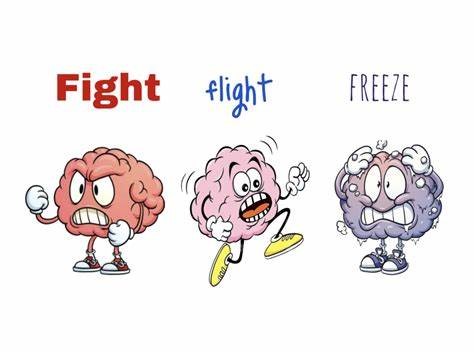
You are probably already aware of the phrase Fight-or-Flight but there are 3 other survival reactions when we feel threatened, Freeze, Flop and Friend which make up our defensive fear responses – also known as the five F’s.

When faced with danger each of the five F’s has its own hope for a possible outcome, that is to stay alive and depending on the nature of the situation, each of these defences reduce our being a threat to our attacker.

Our active defences are to;

  • Friend – to befriend our attacker in the hope of appeasing the situation
  • Fight – physically and verbally responding to the threat – showing aggression
  • Flight – to run away from the situation

Our passive defences are to;

  • Freeze – in order to avoid detection or you ‘just froze’ and unable to shout or call for help
  • Flop – to flop or feint; to minimise harm when you have no other option (as above) in the hope you will be left alone

In the modern world, that same mechanism can sometimes be triggered by everyday stressors or imagined threats. But understanding its origins can empower us to manage it more effectively. So, next time fear creeps in, take a deep breath, acknowledge it, and remember that your brain is doing its ancient job!

Categories
Addiction Children & Young People Difference between Counselling & Psychotherapy Featured Article Gender & Sexuality Grieving & Loss Marriage & Long-Term Relationships Mindfulness and Mental Health PTSD & Trauma Relationships

Is your counsellor a good fit for you?

There are so many counsellors offering a vast range of different therapies and approaches that it’s hard to know how to make the right choice, but it is so important that we do.

Finding the right counsellor, one who you can connect and feel safe with is important. Therapy can be a powerful tool for healing and growth, but only if you have a competent and trustworthy professional by your side. It can be difficult when we are feeling vulnerable and in need of help, to be confident enough to choose someone.

At Personal and Relationship Counselling (PRC) in Plymouth we offer a free 15-minute telephone consultation prior to booking a first appointment. Recommendations are good, but if you don’t have one, a telephone conversation can help and don’t be afraid to say ‘no thank you’, a good counsellor will be understanding – read about our counsellors on ‘Our Therapists’ page.

You can be assured that each counsellor has been handpicked, chosen for their competency and professionalism, empathy and compassion. We’ve checked their qualifications and experience, making sure that all are on the BACP Register of Counsellors and Psychotherapists or an equivalent professional body.

We offer a range of approaches and techniques to suit individual needs and find the fit that’s right for you. If we can’t meet your requirements, we will make recommendations of other trusted local Plymouth counsellors.

Here are some skills, traits and professional behaviours to look out for in your counsellor.

Good Counselling Skills:

  • Actively listening:  A good therapist will pay close attention to what you’re saying and ask clarifying questions. If you feel misunderstood or unheard – that’s a problem.
  • Focused attention: Does your therapist seem bored, tired, preoccupied or disengaged. If so, you’re not getting the focused attention you deserve.
  • Addressing Your Specific Concerns: Therapists should and be able to hear your issues and understand the impact they have on you, and tailor appropriate responses to meet your needs. If they seem stuck in one method or aren’t able to manage with your issue – you may need to find a better fit.
  • Non-judgemental:  Therapy needs to be a safe space to explore difficult emotions. If you feel judged or ashamed this isn’t going to help you – indicating it isn’t a good fit.
  • Working together: Therapy should be a collaborative process with your counsellor helping you to explore deeper and stay with the difficult feelings – rather than handing out simplistic, generic advice and platitudes.
  • Making progress: While you might experience some emotional discomfort processing difficult topics, you should generally feel some sense of healing and hope moving forward.

Maintaining Professional & Ethical standards:

  • Keeping to Appointment Times/Scheduling:  Having a regular time for your counselling is helpfulFrequent cancelling or rescheduling of appointments by your therapist shows a lack of respect for your time and can disrupt your progress in therapy.
  • Relevant Advice: Remember that therapists should stay within their area of expertise. If yours is giving medical, legal or financial advice – that’s not OK.
  • Confidentiality: Counsellors are required to keep your information private, with some exceptions. If you feel your therapist might be gossiping about you or sharing details inappropriately, that’s a concern.
  • Respecting Your Boundaries: If your counsellor shares too much personal information about themselves, pressures you to socialise outside of sessions, asks you for gifts or personal favours or makes unwanted physical contact – that’s a red flag.

Trust your instincts: Sometimes the chemistry just isn’t right. If you feel uncomfortable or unsafe with your therapist, it’s important to find someone else, someone you can connect with.  If you do notice any of the red flags and warning signs it’s time to look for a new therapist.

If you have any concerns, please feel free to contact us Plymouth Counselling (PRC).

Categories
Addiction Difference between Counselling & Psychotherapy Gender & Sexuality Grieving & Loss Marriage & Long-Term Relationships Mindfulness and Mental Health PTSD & Trauma Relationships

How Do I Choose the Right Therapist for Me?

Talking to a therapist is a very personal and often vulnerable experience, so it is important to find a therapist who you connect with and most importantly, feel comfortable sharing your innermost thoughts and feelings.

If you are experiencing relationship issues, depression, anxiety, bereavement, addiction, or problems with gender, sexuality or identity, you might be considering reaching out for counselling and psychotherapy in Plymouth. However, we know that this can be a daunting process especially if you are doing it for the first time. At Personal and Relationship Counselling, we have an excellent, handpicked team of therapists who specialise in a range of different issues and approaches to therapy.

Here’s how the process works;

Initial Consultation
Visit our Our Therapists’ page and scroll through the list of therapists to see if there is anyone you might like to work with. After choosing your preferred therapist, please book in via our online diary, or get in touch with us to set up a free initial 15-minute phone consultation. This gives you a chance to learn more about how they work, and briefly discuss the issues you are facing to see how they may help you work through them.
This also enables both of you to get a good feel as to whether you will be a good fit and decide if you would like to book your first session.

Arrange Your First Session
If you are happy to proceed with the therapist you spoke with, they will set a weekly slot for sessions at a time that is convenient for you.
However, if you do not want to see that therapist, choose another, or you can let us know what you want, and we will assist you with finding the right counsellor or psychotherapist.
It is important to not just match your specific problem with the right specialist, but also someone who makes you feel at ease.

Ongoing Sessions and Support
Once you’ve agreed a time and date, your sessions will begin. You will come to our practice in Looe Street, close to the Barbican and City Centre in Plymouth, and meet with the therapist you have chosen.
They work autonomously with you, building a close therapeutic relationship based on trust and confidentiality, giving you the space to explore your emotions in your own way, in a safe, non-judgemental, warm & compassionate space.
You will then meet, usually on a weekly basis until you have resolved the issue that caused you to seek our support.

Are you thinking about seeking counselling and psychotherapy in Plymouth or online? If so, feel free to get in touch with us to ask any questions. 

Categories
Addiction Difference between Counselling & Psychotherapy Gender & Sexuality Grieving & Loss Marriage & Long-Term Relationships Mindfulness and Mental Health PTSD & Trauma Relationships

What is the Difference Between Counselling and Psychotherapy?

Prospective clients looking at the Personal & Relationship Counselling website will notice that we offer both “Counselling” and “Psychotherapy”, and they might well wonder what exactly is the difference between the two. It’s a good question and as a therapist who has worked at Personal & Relationship Counselling for a long time, and has done both Counselling and Psychotherapy training, I think its one worth trying to answer. Furthermore, I think explaining the question could be a good way to begin to explore Counselling and Psychotherapy more generally.

In my view there is not a clear, obvious and definitive answer to the question, but I would suggest that historically “counselling” has been seen as a process more concerned with the present – with issues and problems thrown up by the demands of everyday world we live in. If you like, the world external to our own minds or psyches. For example, issues provoked by loss of various kinds; by sudden big changes in life; by work issues; by family issues; by illness, look at the impact of Covid on so many lives over the past 2 years. In short, the multiplying of matters that can make our lives more difficult, more challenging & where, therefore, counselling can provide help, solace and support, in dealing with these troubling issues. In this context, counselling may be viewed as being practical and perhaps time-limited.

In contrast I think that historically “psychotherapy” has been understood as a phenomenon more to do with exploring and understanding the internal world i.e., what is going on inside our own head or psyches. And, in focusing more on the “Self” trying to deal with the troubling issues that arise in life, its orientation was often seen as being more on the past, rather than just the present – on how our early life, childhood, may have influenced or shaped our characters, and the way we might deal with the world, sometimes perhaps in ways we have not really seen or understood. In this context, perhaps the process might be “deeper” or take more time.

But in a contempory sense, this kind of difference between the two has been challenged, sometimes to such an extent that the pre-eminent professional body, The British Association of Counselling and Psychotherapy (B.A.C.P) now considers that the terms “counselling” and “psychotherapy” to be interchangeable, a sea change indeed (although some other bodies, for example The United Council for Psychotherapy (U.K.C.P) still see some differences, and can even describe composite notions, such as “psychotherapeutic counselling”).

This may first seem a bit confusing, but in reality, I do not think it is. Both my own experiences, first as a counsellor, then as a psychotherapist, and the huge amount of research and evidence available, confirm that both “counselling” and “psychotherapy” can and do provide the range of the therapeutic interventions implied by putting the historical sense of the two terms together. In other words, “counselling” and “psychotherapy” are both concerned with The Past and The Present, and the relationship between them. We can only live in the present, and most obviously people come to counselling or psychotherapy, to receive help and support in the present, that may facilitate themselves feeling better about themselves, and more resourced to deal with the future ahead of them. Equally it is very true that sometimes exploring childhood and what has happened in the past can facilitate a better understanding of self, and perhaps the reasons why certain unhappy situations seem to occur regularly in life.

In that sense, both counselling and psychotherapy are concerned with the relationship between The Past and The Present and, similarly, the relationship between what I suggested as being the internal world (what is happening inside our minds) and the external world (what is happening in the world we live in). This leads me to suggest that there is a lovely symmetry dissemble here, because in essence counselling and psychotherapy are centred upon the construction of a relationship, between therapist and client, and the overwhelming weight of research evidence available points to the fact that the relationship between client and therapist is the crucial factor in making counselling / psychotherapy effective and helpful. The techniques and approaches, and models of therapy are important, but essentially, it is the relationship that is the critical source of healing.

This is certainly in line with my own experience, and that of my most trusted and valued colleagues over many years.

– relationship, relationship, relationship! –
The relationship between the Past and the Present
The relationship between the Internal and the External Worlds
The relationship between the Therapist and the Client

So, in exploring counselling & psychotherapy more generally, as I hope to do, it is essential to explore the nature of these relationships, the forms they might take, and how they can facilitate the solving of life problems, and the growth and development of the individual.

Les Parsons, March 2022

Categories
Addiction Difference between Counselling & Psychotherapy Gender & Sexuality Grieving & Loss Marriage & Long-Term Relationships Mindfulness and Mental Health PTSD & Trauma Relationships

Should I Get Online or Face-to-Face Counselling?

At Personal and Relationship Counselling, we offer couples counselling and psychotherapy from our private practice in Plymouth, along with giving clients the option of receiving sessions online. In our post-pandemic world, it is important that clients have a choice about whether they have online or in-person counselling. As a result, you may be wondering which type of session is most suitable for you. This blog post walks you through the different advantages of the two.

Online Counselling
If you are seeking counselling or psychotherapy for the first time, it is normal to feel slightly anxious, in which case it may be preferable to start off by receiving sessions online. Working with one of our therapists from the comfort of your own home allows you to feel more at ease and speak freely about the problems you are facing. It gives you that extra layer of privacy, along with saving you from travel expenses and the anxiety of visiting a new place.

Another important benefit of online counselling is flexibility, which is particularly useful when work/life commitments can make this hard to do on an in-person basis every week. Online counselling is no less meaningful and helpful than meeting face-to-face. The impact of the therapy, in whatever medium, depends on your commitment. More generally, online counselling is the best option for those with a busy schedule. It guarantees that you don’t unnecessarily miss sessions with your counsellor.

Face-to-Face Counselling
While many may feel less anxious receiving counselling online, others will see face-to-face counselling as the only viable way to make true progress with their therapist. Building that in-person rapport with your counsellor in Plymouth may be what you need to properly open up about your feelings. Seeing their body language and feeling their vocal tone is often a necessary aspect of feeling comfortable enough to effectively communicate how you feel.

Furthermore, if you don’t have a peaceful home life, coming to our private practice in Plymouth could provide the safe and dependable space you need. For some people, a counsellor’s therapy room may feel like the only safe place they know. Visiting the same place every week, at the same time, can act as a crucial psychological anchor that lays the template for recovery. This is often the case for young people, or people receiving help with PTSD and other trauma-related issues.

If you are experiencing anxiety, depression, relationship issues, young people issues, or any other issue that you need help with, feel free to get in touch with us to ask any further questions you might have about face to face, online counselling and psychotherapy.