Categories
Addiction Children & Young People Difference between Counselling & Psychotherapy Featured Article Gender & Sexuality Grieving & Loss Marriage & Long-Term Relationships Mindfulness and Mental Health PTSD & Trauma Relationships

Is your counsellor a good fit for you?

There are so many counsellors offering a vast range of different therapies and approaches that it’s hard to know how to make the right choice, but it is so important that we do.

Finding the right counsellor, one who you can connect and feel safe with is important. Therapy can be a powerful tool for healing and growth, but only if you have a competent and trustworthy professional by your side. It can be difficult when we are feeling vulnerable and in need of help, to be confident enough to choose someone.

At Personal and Relationship Counselling (PRC) in Plymouth we offer a free 15-minute telephone consultation prior to booking a first appointment. Recommendations are good, but if you don’t have one, a telephone conversation can help and don’t be afraid to say ‘no thank you’, a good counsellor will be understanding – read about our counsellors on ‘Our Therapists’ page.

You can be assured that each counsellor has been handpicked, chosen for their competency and professionalism, empathy and compassion. We’ve checked their qualifications and experience, making sure that all are on the BACP Register of Counsellors and Psychotherapists or an equivalent professional body.

We offer a range of approaches and techniques to suit individual needs and find the fit that’s right for you. If we can’t meet your requirements, we will make recommendations of other trusted local Plymouth counsellors.

Here are some skills, traits and professional behaviours to look out for in your counsellor.

Good Counselling Skills:

  • Actively listening:  A good therapist will pay close attention to what you’re saying and ask clarifying questions. If you feel misunderstood or unheard – that’s a problem.
  • Focused attention: Does your therapist seem bored, tired, preoccupied or disengaged. If so, you’re not getting the focused attention you deserve.
  • Addressing Your Specific Concerns: Therapists should and be able to hear your issues and understand the impact they have on you, and tailor appropriate responses to meet your needs. If they seem stuck in one method or aren’t able to manage with your issue – you may need to find a better fit.
  • Non-judgemental:  Therapy needs to be a safe space to explore difficult emotions. If you feel judged or ashamed this isn’t going to help you – indicating it isn’t a good fit.
  • Working together: Therapy should be a collaborative process with your counsellor helping you to explore deeper and stay with the difficult feelings – rather than handing out simplistic, generic advice and platitudes.
  • Making progress: While you might experience some emotional discomfort processing difficult topics, you should generally feel some sense of healing and hope moving forward.

Maintaining Professional & Ethical standards:

  • Keeping to Appointment Times/Scheduling:  Having a regular time for your counselling is helpfulFrequent cancelling or rescheduling of appointments by your therapist shows a lack of respect for your time and can disrupt your progress in therapy.
  • Relevant Advice: Remember that therapists should stay within their area of expertise. If yours is giving medical, legal or financial advice – that’s not OK.
  • Confidentiality: Counsellors are required to keep your information private, with some exceptions. If you feel your therapist might be gossiping about you or sharing details inappropriately, that’s a concern.
  • Respecting Your Boundaries: If your counsellor shares too much personal information about themselves, pressures you to socialise outside of sessions, asks you for gifts or personal favours or makes unwanted physical contact – that’s a red flag.

Trust your instincts: Sometimes the chemistry just isn’t right. If you feel uncomfortable or unsafe with your therapist, it’s important to find someone else, someone you can connect with.  If you do notice any of the red flags and warning signs it’s time to look for a new therapist.

If you have any concerns, please feel free to contact us Plymouth Counselling (PRC).
Categories
Marriage & Long-Term Relationships Mindfulness and Mental Health PTSD & Trauma Relationships

Counselling for Armed Forces & NHS Staff in Plymouth

Feeling the Strain? Counselling Support in Plymouth for Those Who Serve

Are you a member of the armed forces, emergency services, NHS nurse or doctor, HM prison service feeling the weight of stress? You’re not alone. Plymouth is home to many heroes who dedicate themselves to keeping us safe and healthy. But even the strongest of us need support sometimes.

At PRC counselling practice on the Barbican in Plymouth, we specialise in providing confidential counselling and psychotherapy services tailored to the unique needs of service personnel and healthcare professionals. We understand the challenges you face, from the pressures of deployment to the emotional toll of daily emergencies.

Our experienced accredited therapists can help you with a variety of issues, including:

  • Stress and anxiety
  • PTSD (Post-Traumatic Stress Disorder)
  • Depression
  • Relationship problems
  • Work-life balance
  • Moral injury

We offer a safe and supportive space for you to explore your feelings and develop healthy coping mechanisms. We believe that everyone deserves to feel well, and we’re here to help support you in addressing your emotional wellbeing.

Here’s what sets us apart:

  • We understand your world. Our therapists have experience working with service personnel and healthcare professionals, and they are familiar with the specific challenges you face, both Steve and Nigel served in the armed forces.
  • We offer flexible appointments. We know that your schedule can be demanding, so we offer appointments at your convenience.
  • We are confidential. Everything you discuss in therapy will be kept confidential, except in limited circumstances where the law requires us to disclose information.

Don’t wait until you’re struggling to cope. Take the first step towards feeling better today with help from a counsellor or therapist at Plymouth Counselling.

Contact us for a free 15-minute phone consultation to discuss your needs.

Categories
Marriage & Long-Term Relationships Mindfulness and Mental Health PTSD & Trauma Relationships

Books Worth Reading About Mental Health

We’ve found the following books on mental health to be useful and want to share them with you.  Mental health has many facets and choosing a book is subjective, it depends on individual needs and preferences. However, considering the main counselling issues brought to us here at PRC in Plymouth, we regard the following books on the topic the most informative.

For understanding trauma and its effects:

  • The Body Keeps the Score: Brain, Mind, and Body in the Healing of Trauma by Bessel van der Kolk: This book explores the physical and psychological effects of trauma and offers evidence-based methods for healing.
  • What Happened to You? Conversations on Trauma, Resilience, and Healing by Bruce Perry and Oprah Winfrey: This book explores the impact of childhood trauma on mental and physical health and offers insights on building resilience and healing.

For managing anxiety and stress:

  • Maybe You Should Talk to Someone by Lori Gottlieb: This memoir by a therapist explores the experiences of both the therapist and the client, offering insights into therapy and mental health challenges.
  • The Anxiety and Phobia Workbook by Edmund J. Bourne: This practical guide provides self-help strategies for managing anxiety and phobias, including relaxation techniques, cognitive behavioural therapy (CBT), and exposure therapy.

For self-compassion and self-acceptance:

  • The Mindful Way Through Depression by Mark Williams and John Teasdale: This book teaches mindfulness-based cognitive therapy (MBCT) techniques for preventing and managing depression.
  • The Gifts of Imperfection by Brené Brown: This book explores the importance of vulnerability, self-compassion, and authenticity in mental and emotional well-being.

For navigating relationships and boundaries:

  • Attached: The New Science of Adult Attachment and How It Can Help You Find–and Keep– Love by Amir Levine and Rachel S.F. Heller: This book explores attachment styles and their impact on romantic relationships.
  • Set Boundaries, Find Peace: A Guide to Reclaiming Yourself by Nedra Glover Tawwab: This book teaches readers how to set healthy boundaries in their personal and professional lives.

For memoirs and personal stories:

  • The Noonday Demon: An Atlas of Depression by Andrew Solomon: This Pulitzer Prize-winning book explores the history, science, and personal experience of depression.
  • Eleanor Oliphant is Completely Fine by Gail Honeyman: This heart-warming novel tells the story of a socially awkward woman who learns to connect with others.

If you are concerned about your own mental health, it is important to reach out to a qualified mental health professional. Here at PRC counselling in Plymouth we can offer a range of therapists who you can book an appointment with, or have an initial 15-minute chat, just to find out whether we can help you or guide you.

Here are some additional resources that you may find helpful:

  • The National Health Service (NHS) has a website with information about mental health – NHS UK
  • Mind is a mental health charity that provides information and support – Mind
  • The Samaritans is a charity that provides emotional support to anyone in distress – Samaritans
Categories
Marriage & Long-Term Relationships Mindfulness and Mental Health Relationships

Choppy Waters in Your Relationship

If you’re a Plymouth resident facing choppy waters in your relationship, here are some tips to help you navigate the storm and find calmer waters:

Charting the Course:

  1. Identify Your Triggers: Understanding your own and your partner’s triggers helps avoid unnecessary storms. Often, we pre-empt our partner, thinking we know what they’re going to say. This blocks them from expressing what they really feel and think, which prevents any resolution to an argument or discussion.
  2. Calm Communication: If things get heated, avoid becoming accusatory. “You” statements can lead to defensive reactions. Instead, use “I” statements that focus on your feelings. Active listening, without interrupting, shows respect and fosters understanding, helping reduce negativity towards one another.
  3. Seek Common Ground: Remember, you’re a team, not rivals. Focus on finding shared goals and solutions instead of individual victories.


Weathering the Storm:

  1. Take a Time Out: If emotions start running high, agree to a cooling-off period before resuming the conversation. Take a walk, practice relaxation techniques, or engage in separate activities.
  2. Focus on the Issue, Not the Person: Attacking your partner’s character is counterproductive. Stay focused on the specific issue at hand and avoid bringing up past grievances.
  3. Compromise is Key: Be willing to meet halfway. It’s not about winning or losing but finding a solution that works for both of you.


Reaching Safe Harbour:

  1. Express Appreciation: Even after conflict, acknowledge your partner’s positive qualities and express your appreciation for them.
  2. Celebrate Reconciliation: When you successfully navigate a conflict, take a moment to celebrate your teamwork and strengthened bond.
  3. Seek Professional Help: If you’re struggling to navigate conflict on your own, consider seeking professional guidance from a counsellor or therapist at Plymouth Counselling.

Remember that conflicts are normal in relationships; it’s how we handle them that matters most! 😊

Categories
Marriage & Long-Term Relationships Mindfulness and Mental Health Relationships

Does Marriage Counselling Work? Benefits, Insights & When to Seek Help

It’s completely normal for marriages to face challenges. Over time, these difficulties can strain the relationship, making it harder to stay connected. While some couples try to resolve issues on their own, many are now turning to professional help. In fact, nearly 10% of marriages end in divorce (ONS, 2021), and counselling charity Relate has seen a 30% rise in couples aged 20–30 seeking support since 2014.

What is Marriage Counselling?

Marriage counselling is a form of therapy where couples work with a trained professional to address issues affecting their relationship. The goal is to improve communication, resolve conflicts, and rebuild emotional intimacy. When both partners actively participate, counselling can be a powerful tool to reconnect and strengthen the bond.

Rather than assigning blame, counselling provides a safe space for both individuals to speak openly and honestly. The focus is on understanding, empathy, and collaboration. Many therapists view the relationship itself as the client, encouraging both partners to take responsibility for its healing.

Through counselling, couples can:

  • Break negative patterns of interaction
  • Deepen emotional connection
  • Improve intimacy
  • Build healthier communication habits

These skills often continue to benefit the relationship long after therapy ends.

Who can Benefit from Counselling?

You do not need to be in crisis to seek help. Counselling is also a proactive way to nurture your relationship and help it thrive. For younger couples, it can lay the groundwork for strong communication and mutual understanding from the start.

If you feel your relationship could be stronger, or if you want to grow as a partner, counselling offers a space to make meaningful changes. Early intervention – even for small issues – can prevent problems from escalating.

Consider couples counselling if:

  • Arguments are frequent or unresolved
  • You feel disconnected or indifferent
  • There’s a lack of support, appreciation, or love
  • You’re facing challenges like infidelity, addiction, or abuse
  • You feel held back or misunderstood by your partner

Whatever the issue, counselling provides the tools and support to work through it together, helping you build a resilient and fulfilling relationship.

Need Support?

If you feel your relationship is struggling or simply want to strengthen your connection, our experienced counsellors in Plymouth are here to help. Feel free to call or email us – we are happy to answer any questions you may have.

Categories
Marriage & Long-Term Relationships Mindfulness and Mental Health Relationships

Relationship Counselling

As human beings we are social creatures, from the moment we are born and throughout our lives, we need others and the quality of our relationships with others is vital to our sense of well-being. As adults we hope and expect our relationships to be loving and harmonious, providing the warmth and security that allows us to deal with the pressures and demands of life, and to feel valued and appreciated.

And yet, most of us know from our own lives or from those of our close friends and families, that quite often relationships break down, or that one or both partners are living not in harmony but in states of unhappiness, frustration and insecurity. Television and newspapers constantly remind us that the pressures and stresses of modern life lead to increased breakdown of marriages and partnership relationships, often with much consequent misery for individuals, their families, children and friends.

In other words, we may find in our own lives or of those we are close to, a big gap between what we hope for in relationship and what we are actually experiencing. And perhaps if we look at it, this is not really surprising – after all, a relationship is ultimately about two people seeking to live together, and each person will bring their very different life experiences to the relationship. They may have grown up in very different families, with different norms and values and expectations. Equally, we are all bound to have experienced losses and painful events in our lives, which we will bring to our relationships. At the beginning of our relationship these differences may seem small and irrelevant, compared to our loving feelings. But they may grow in time, especially in the context of the pressures in our lives from work, children, families and friends.

If they begin to grow, we may find our experience of our relationship changing – misunderstandings occur more often and good honest communication seems to shrivel in comparison. We begin to feel that our partner does not really understand us – yet they are saying the same thing! We are increasingly frustrated by their irritating habits and arguments occur more often; they never seem to be completely sorted out. Sometimes they seem to be about small matters, sometimes about the things that are most important to us – how we are with our children and families, how we express our love and our sexuality.

For some the crisis is temporary, but for others communication really seems to become increasingly difficult, eroding all the feelings of love, warmth and security. Where this is happening, it may feel as though hope for resolution is fading and this can be where relationship counselling may offer vital help. Just as in individual counselling and psychotherapy, it can provide a safe and secure place where both partners are treated with care and respect by a counsellor who is separate from the relationship and the complex world in which exists. Therefore, able to be objective and neutral and creating the conditions whereby painful areas can be shared and explored rather than ignored or simply blamed on the other.

The confidentiality and security provided through relationship counselling can help to re-establish genuine communication, promoting understanding and realisation that with honesty and commitment wounds in relationships can heal.

Categories
Marriage & Long-Term Relationships Mindfulness and Mental Health PTSD & Trauma Relationships

The Signs and Effects of Gaslighting

Gaslighting is a term that has come to prominence in the last few years to describe behaviour in a toxic relationship. But what exactly is gaslighting, how can you spot it and how does it affect people?

What is gaslighting?

Gaslighting is a term used to describe a form of psychological abuse where one person or a group of people manipulate someone to question their own sanity, their memories or their perception of reality. It actually derives from a play and film, Gaslight, in which a husband convinces his wife that she has a mental illness. It can be carried out by more than one person, but it usually takes place within a relationship and can cause real distress and anxiety.

Signs of gaslighting?

There are many different ways that someone can ‘gaslight’ another person. Here are some things you should look out for if you are suspicious of gaslighting.

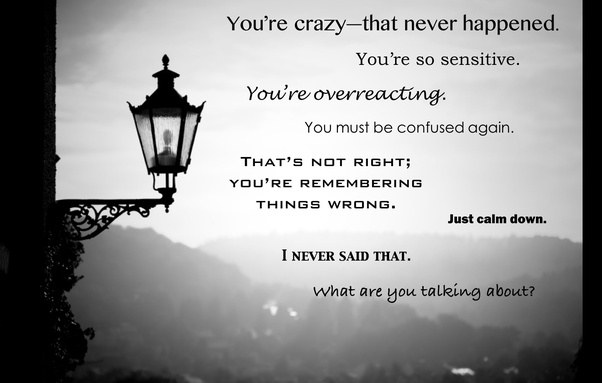
Countering – this is where your memory may be questioned. They may say things like, ‘That’s not what happened’, or ‘Have you forgotten how it really happened?’

Withholding – this is when a person pretends, they don’t understand what you are saying, in order to make you doubt yourself. ‘I don’t get what you are saying’, or ‘You’re not making sense’.

Trivializing – your reaction to a situation may be trivialised by another person and you may be accused of over-reacting or being too sensitive.

Denial – if the other person refuses to accept responsibility for their actions, blaming someone else or forgetting something happened, this is ‘denial’.

Diverting – this is when someone changes the subject or questions your thinking to make you think that it isn’t important or you have got the situation wrong.

Effects of gaslighting?

When you are the victim of gaslighting it can leave you feeling very insecure in your relationship. You may feel alone and powerless, convinced that you are the ‘crazy’ or ‘unstable’ one, when in reality it is the other person.

It will make you question everything. Your sanity, your memories and your ability to think rationally. You will also question the other person in the relationship – do you really know them? You will doubt yourself and your feelings, convinced that it is you that over-reacts and is too sensitive. If gaslighting happens over a long period of time, it can make you believe what the other person is saying and seriously doubt your own sanity.

Gaslighting enables the other person to exert their power and control over you, leaving you feeling lacking in confidence and deeply unhappy. Your self-esteem will be affected and you may also suffer with anxiety, treading on eggshells around the other person, never knowing what to say or think.

However, you look at it, gaslighting is a powerful and destructive form of manipulation that has no place in a healthy and balanced relationship. If you feel like you are being subjected to gaslighting, please get in touch if you would like to know more about how our counsellors at Personal & Relationship Counselling in Plymouth can help. Please give us a call or email and we’d be happy to answer any questions you might have.  

Categories
Addiction Marriage & Long-Term Relationships Mindfulness and Mental Health PTSD & Trauma Relationships

Addiction

At our practice in Plymouth, we’ve been supporting individuals in their journey to overcome addiction for many years—whether it’s related to substances or compulsive behaviours. These struggles often come hand-in-hand with challenges like depression, anxiety, or low self-esteem.

A lot of people approach addiction by focusing on the behaviour itself—trying to stop or abstain. And while this can work for some, digging deeper into the underlying reasons behind the addiction often leads to more meaningful and lasting results.

Renowned addiction specialist Gabor Maté, defines addiction as “a complex psycho-physiological process manifested in any behaviour in which a person finds pleasure and relief and therefore craves, but suffers negative consequences without being able to give it up. So; craving, pleasure and relief in the short term, negative consequences in the long term, and the inability or refusal to desist—that’s what addiction is.

He goes on to explain that addiction extends beyond substances like drugs, alcohol, or nicotine. It can encompass behaviours like shopping, pornography, sex, overworking, gambling, eating or even excessive use of the internet or mobile phones. “The issue is not the external target or the behaviour—the issue is one’s internal relationship to it.”

So, where does addiction come from? Well, it’s often tied to how we cope with stress and trauma. When life overwhelms us and we don’t have the tools to manage those feelings, we can turn to substances or behaviours that provide quick but temporary relief. It might be that extra glass of wine, staying late at work to avoid home stress, or compulsive online shopping after a hard day. These coping mechanisms feel like they work in the moment—but in the long run, they can lead to a cycle that’s hard to break.

Addiction isn’t the root problem—it’s a way to mask deeper pain. For many, that pain goes all the way back to experiences like neglect, abuse, or trauma in early life. Without healthy ways to process intense emotions, we might disconnect from them entirely. Over time, substances or behaviours can become crutches to help avoid those lingering feelings, keeping us stuck in a loop of addiction.

Breaking free means more than just stopping the behaviour—it’s about understanding and addressing the pain underneath.

If you’re ready to take that first step, our counsellors in Plymouth are here to help. We’re happy to answer any questions you have—just give us a call or drop us an email.

Categories
Featured Article Gender & Sexuality Marriage & Long-Term Relationships Mindfulness and Mental Health PTSD & Trauma Relationships

The People Repair Shop

There is a place in Looe Street whose people are a pleasure to meet. When you are emotionally depleted and utterly defeated; try to pluck up the courage, as they are wealthy in their knowledge, they are wise with words and you will be heard they refrain from opinion, you talk and they listen they are non-judgemental, they will be gentle you pause and they enquire, they will help you with your personal quagmire.

It is like a chat over a tea or a beer; but it doesn’t matter if you shed a tear there will always be a tissue, for whatever the issue. They will help you to value your life and restore belief, they are realistic and have the experience so, there will be no drama as they tend to your trauma. Take their counsel to ease your mind; you will not feel alone or left behind they have heard many things before but to them – your issue is unique and to no one else will they share or speak.

I share these thoughts and they are my own words.
In a few weeks’ time I will take my leave, but I would beckon you forward to take my place, as I wish for you also to have inner peace.

Annie Jenkin 2014


Categories
Addiction Difference between Counselling & Psychotherapy Gender & Sexuality Grieving & Loss Marriage & Long-Term Relationships Mindfulness and Mental Health PTSD & Trauma Relationships

How Do I Choose the Right Therapist for Me?

Talking to a therapist is a very personal and often vulnerable experience, so it is important to find a therapist who you connect with and most importantly, feel comfortable sharing your innermost thoughts and feelings.

If you are experiencing relationship issues, depression, anxiety, bereavement, addiction, or problems with gender, sexuality or identity, you might be considering reaching out for counselling and psychotherapy in Plymouth. However, we know that this can be a daunting process especially if you are doing it for the first time. At Personal and Relationship Counselling, we have an excellent, handpicked team of therapists who specialise in a range of different issues and approaches to therapy.

Here’s how the process works;

Initial Consultation
Visit our Our Therapists’ page and scroll through the list of therapists to see if there is anyone you might like to work with. After choosing your preferred therapist, please book in via our online diary, or get in touch with us to set up a free initial 15-minute phone consultation. This gives you a chance to learn more about how they work, and briefly discuss the issues you are facing to see how they may help you work through them.
This also enables both of you to get a good feel as to whether you will be a good fit and decide if you would like to book your first session.

Arrange Your First Session
If you are happy to proceed with the therapist you spoke with, they will set a weekly slot for sessions at a time that is convenient for you.
However, if you do not want to see that therapist, choose another, or you can let us know what you want, and we will assist you with finding the right counsellor or psychotherapist.
It is important to not just match your specific problem with the right specialist, but also someone who makes you feel at ease.

Ongoing Sessions and Support
Once you’ve agreed a time and date, your sessions will begin. You will come to our practice in Looe Street, close to the Barbican and City Centre in Plymouth, and meet with the therapist you have chosen.
They work autonomously with you, building a close therapeutic relationship based on trust and confidentiality, giving you the space to explore your emotions in your own way, in a safe, non-judgemental, warm & compassionate space.
You will then meet, usually on a weekly basis until you have resolved the issue that caused you to seek our support.

Are you thinking about seeking counselling and psychotherapy in Plymouth or online? If so, feel free to get in touch with us to ask any questions.